

Der Markt verlangt eine schnellere Reaktion auf Veränderungen - die sich zunehmend chaotisch anfühlen
Viele Unternehmen kennen das gleiche Spannungsfeld. Die Kunden erwarten eine schnellere Anpassung, der Markt ist unbeständiger, und der Wettbewerb lässt wenig Zeit zum Abwarten. Der Reflex ist logisch: härter arbeiten, straffer planen, mehr koordinieren. Tu alles, um das Tempo zu erhöhen. Aber was intern passiert, fühlt sich selten nach Beschleunigung an. Die Besprechungen nehmen zu, die Verantwortlichkeiten stapeln sich und die Teams sind meist unruhig. Die Brandbekämpfung wird zur täglichen Routine. Verbesserungen werden auf später verschoben, weil jetzt keine Zeit dafür ist. Dieses Gefühl ist nicht auf einen Mangel an Engagement oder Professionalität zurückzuführen. Es ist ein systemischer Effekt. Und ein Faktor spielt dabei eine größere Rolle, als oft erkannt wird: die Kapazitätsauslastung.
Warum die Kapazitätsauslastung den Unterschied zwischen Agilität und Chaos ausmacht
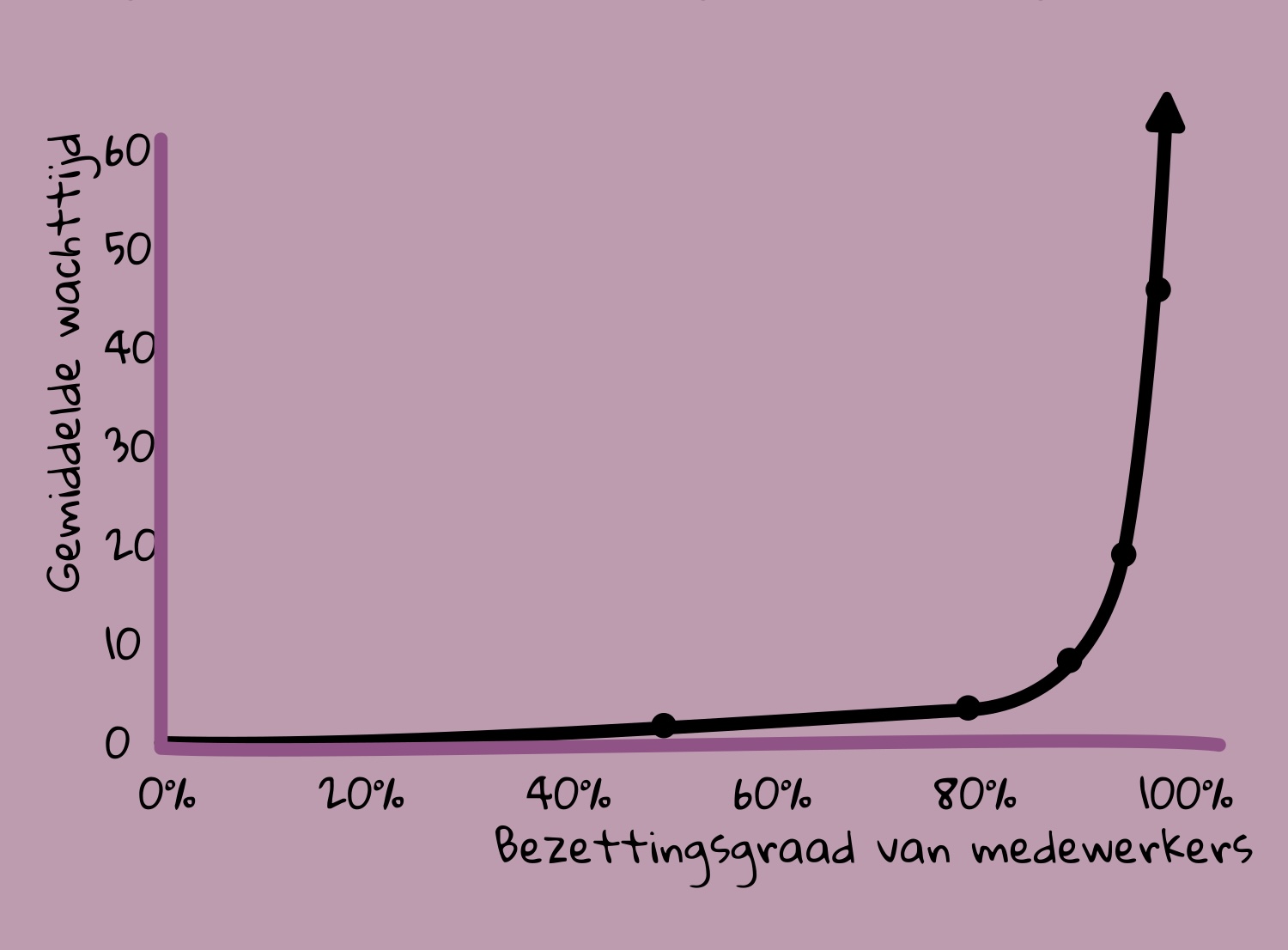
Die Forschung in den Bereichen Warteschlangentheorie, Betriebsmanagement und Lean zeigt seit Jahrzehnten das gleiche Muster. Systeme, die strukturell überlastet sind, verlieren ihre Fähigkeit, mit Schwankungen umzugehen. Das gilt für Fabriken und Krankenhäuser, aber genauso für Managementteams, Teams und Wissensarbeit. Solange der Auslastungsgrad moderat ist, kann ein System Schwankungen auffangen. Kleine Unterbrechungen bleiben klein. Es gibt Raum, um zu reagieren, sich zu erholen und zu lernen. Aber wenn der Auslastungsgrad steigt, ändert sich dieses Bild schnell. Der Effekt ist nicht linear. Das macht die Sache so tückisch.
Wenn Treffen ihren Zweck verlieren
Dieser exponentielle Effekt wurde mathematisch nachgewiesen und ist in der Praxis immer wieder zu beobachten. Ein kleiner Anstieg der Nachfrage bei hoher Auslastung führt nicht zu einer kleinen Verzögerung, sondern zu einer Kettenreaktion aus Verschiebungen, zusätzlicher Koordination und Wiederherstellungsarbeiten. In den Unternehmen zeigt sich das in vollen Terminkalendern ohne Spielraum, in Entscheidungen, die in der Schwebe bleiben, weil alles Priorität hat, in verstärkten Beratungen, um den Druck zu verteilen, und in Verbesserungsinitiativen, die verschoben werden, “bis sich die Lage beruhigt”.”
Das Paradoxon: Druck fühlt sich wie Geschwindigkeit an, macht aber das Lernen unmöglich
Wenn der Druck zunimmt, erscheint es logisch, Menschen und Teams enger zu planen. Das gibt ein Gefühl der Kontrolle. Alle sind beschäftigt, alles läuft reibungslos. Aber genau diese maximale Auslastung macht das System angreifbar. Jede neue Änderung muss irgendwo hineingequetscht werden. Jeder Kundenwunsch konkurriert mit der bestehenden Arbeit. Verbesserung fühlt sich wie etwas Zusätzliches an. Nicht, weil Verbesserungen unwichtig sind, sondern weil keine Zeit oder Aufmerksamkeit übrig bleibt, um sie richtig durchzuführen. Dies berührt direkt das Wesen der kontinuierlichen Verbesserung. Bei der kontinuierlichen Verbesserung geht es nicht darum, sich schneller zu verändern, sondern darum, kontinuierlich aus dem zu lernen, was bei der Arbeit passiert. Und Lernen erfordert etwas, das unter Druck als erstes verschwindet: Aufmerksamkeit.

Kontinuierliche Verbesserung erfordert Rhythmus, nicht Geschwindigkeit
Im Kern ist die kontinuierliche Verbesserung erstaunlich einfach. Es geht darum:
- darauf achten, was immer wieder zurückkommt
- Sich bewusst Zeit dafür nehmen
- und das in gleichmäßigem Tempo
Nicht als separate Aktion, sondern als Teil der Arbeit. Dieser Rhythmus ist nicht universell. Er richtet sich nach dem Rhythmus des Teams oder des MT. Ein Team, das täglich zusammenarbeitet, lernt anders als ein MT, der sich monatlich trifft. Häufigkeit und Dauer richten sich nach der Arbeit, nicht andersherum. Das ist genau der Grund, warum kontinuierliche Verbesserung nicht funktioniert, wenn alles durchgeplant ist. Ohne Freiraum verschwindet das Lernen aus dem Blickfeld. Auswertungen werden übersprungen, Reflexion wird aufgeschoben und Verbesserung wird zu etwas für “später”. Später, das selten kommt.
Transparenz hilft, aber nur, wenn das Lernen folgt
Im letzten Blog haben wir uns mit der Bedeutung von Klarheit und Sichtbarkeit beschäftigt. Weniger Beratung findet statt, wenn die Ziele klar sind und die Informationen sichtbar gemacht werden. Diese Transparenz ist wichtig, aber nicht ausreichend.
Dinge sichtbar zu machen, ohne Zeit zum Lernen zu haben, führt hauptsächlich zu mehr Signalen. Kontinuierliche Verbesserung beginnt erst, wenn es auch Raum gibt, diese Signale gemeinsam zu untersuchen. Nicht alles auf einmal, aber ein Muster, ein wiederkehrendes Thema, das Aufmerksamkeit verdient.
Transparenz hilft zu erkennen, wo Lernen nötig ist. Rhythmus und Zeit sorgen dafür, dass es tatsächlich passiert.
Schneller auf Veränderungen zu reagieren beginnt damit, im richtigen Moment langsamer zu werden
Die unbequeme Erkenntnis ist: Wenn du schneller auf Veränderungen reagieren willst, musst du dich trauen, irgendwo langsamer zu werden. Nicht überall. Nicht immer. Aber genau dort, wo sich die Arbeit wiederholt und nach Verbesserungen verlangt. Das ist kein Verlust von Schwung, sondern eine Investition in Agilität. Maximale Auslastung fühlt sich effizient an, nimmt aber den Raum zum Lernen weg. Kontinuierliche Verbesserung erfordert Aufmerksamkeit, einen angemessenen Rhythmus und die Zeit, eine Sache nach der anderen zu verbessern. Unternehmen, die sich das zutrauen, sind nicht langsamer, sondern besser in der Lage, mit den Anforderungen des Marktes und der Kunden Schritt zu halten.
Strukturverbesserung ein praktisches Instrument
Strukturelle Verbesserung der Arbeitsweise des Teams, indem du dir regelmäßig Zeit nimmst, um sie zu überprüfen und anzupassen und das Wissen des gesamten Teams zu nutzen, um dem Kunden effektiver einen Mehrwert zu bieten.
Nimm dir regelmäßig Zeit, um deine Arbeitsweise zu überprüfen und anzupassen. Dadurch wird sichergestellt, dass ihr euch als Team verbessert. Indem du dies auf abwechslungsreiche Weise tust, bleibst du auf dem Laufenden und schaffst immer mehr Wert für deinen Kunden.
- Mehr Proaktivität bei der Beseitigung von Hemmnissen
- Reibungslosere Zusammenarbeit
- Steigerung der Arbeitszufriedenheit
- Stärkere Konzentration auf die Entwicklung des Handwerks

 English
  Nederlands
  Deutsch
  Français de Belgique