
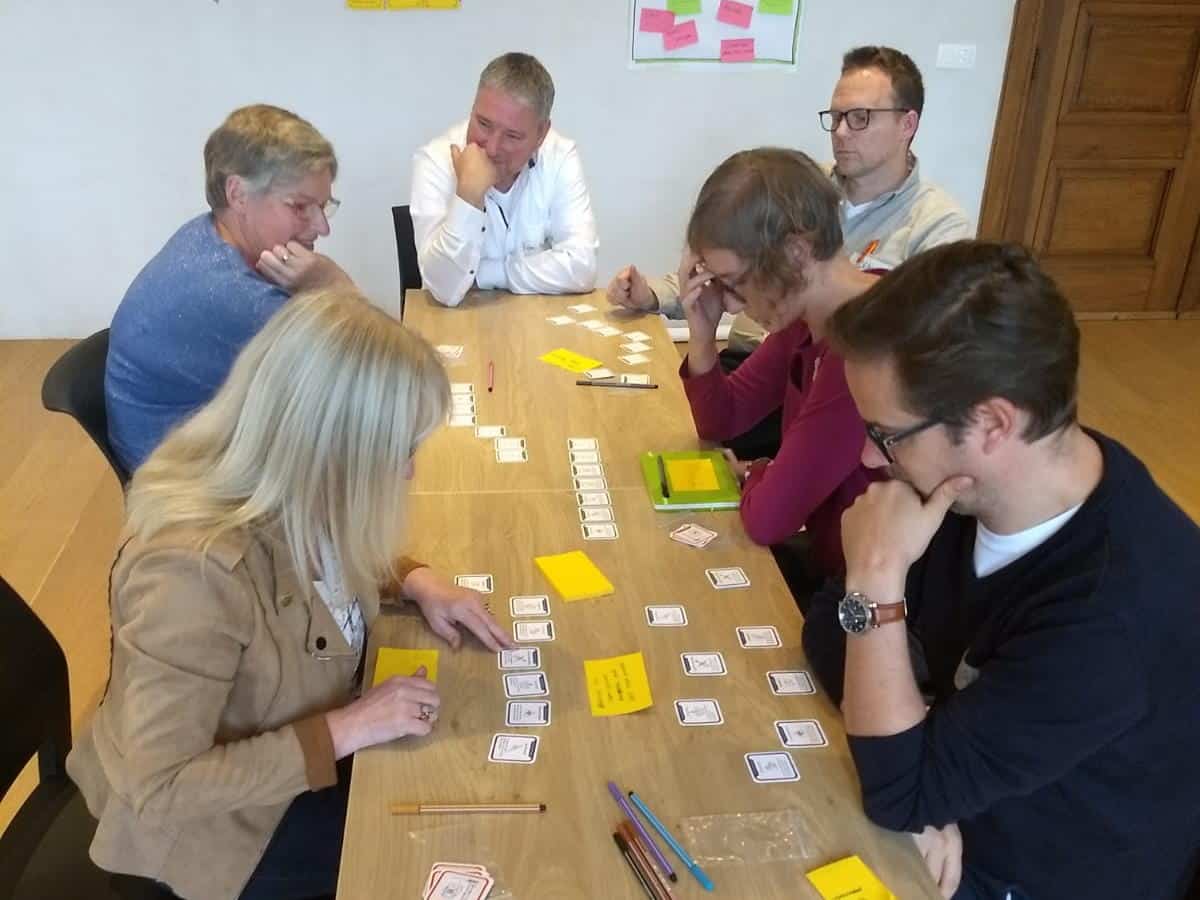
In fast jedem Treffen gibt es einen Moment, in dem sich die Richtung ändert. Nicht dramatisch. Nicht sichtbar. Aber spürbar. Der Moment, in dem ein Teilnehmer die Bühne betritt, die Richtung vorgibt, und der Rest folgt. Nicht, weil alle damit einverstanden sind. Sondern weil es einfacher ist, mitzumachen, als das Schweigen zu brechen.
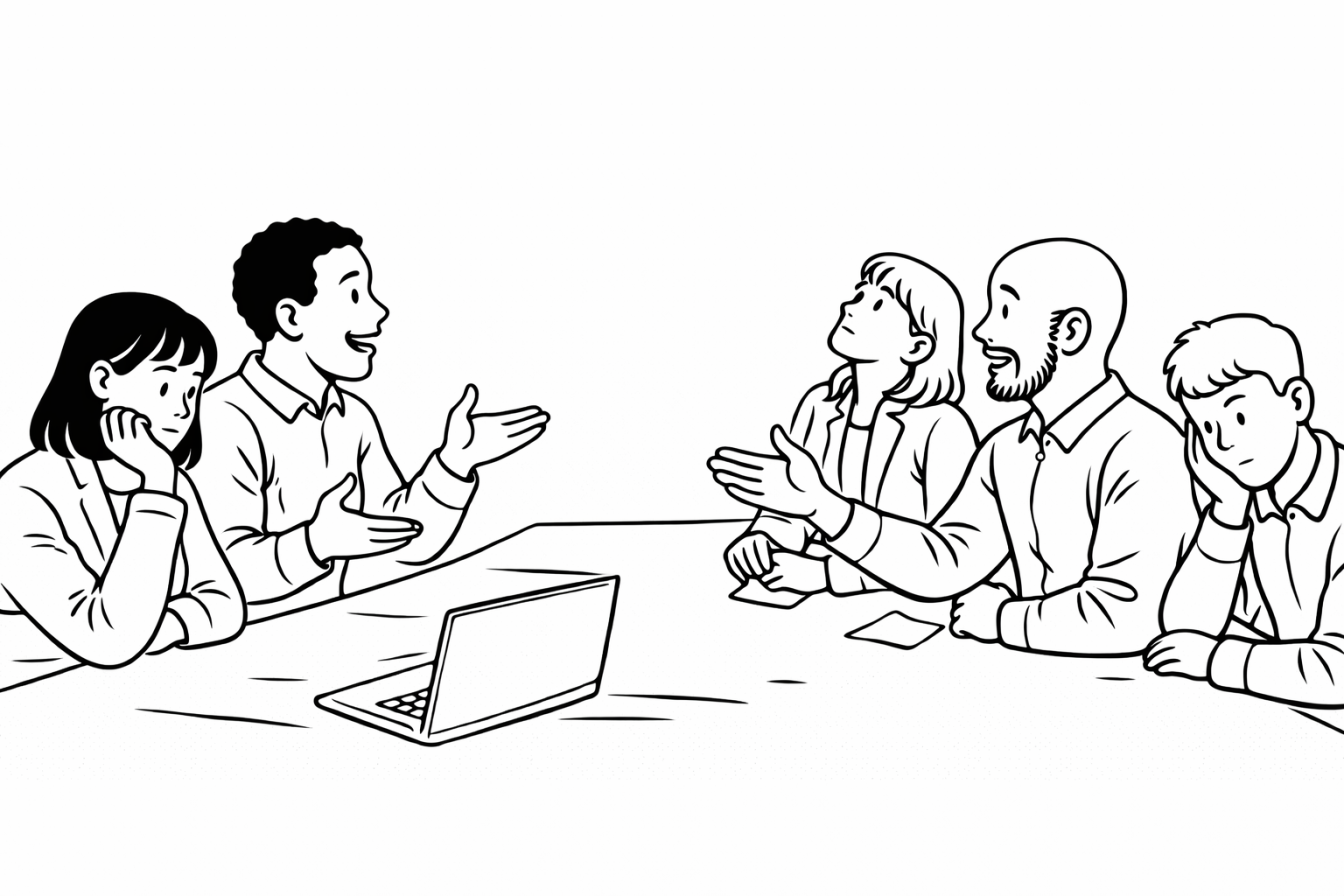
Marianne merkt das. Sie sitzt in ihrem MT-Meeting. Geert greift eine Idee auf und stellt sofort die Verbindung zu Struktur und Planung her. Angelique schließt sich ihm an. Die Energie fließt. Doch auf halbem Weg fällt ihr etwas auf: Zwei Kollegen haben noch nichts gesagt. Sie sehen zu, hören zu und nicken gelegentlich. Hinterher, beim Kaffee, sagt einer von ihnen: “Ich wollte etwas beitragen, aber es ging so schnell.” Dieser Satz bleibt haften. Denn es ist nicht das erste Mal.
Das Muster, das niemand erwähnt
In vielen Teams sind es immer die gleichen Leute, die das Wort ergreifen. Die schnellen Redner, die lauten Denker. Menschen, die ihre Gedanken formulieren, während sie sprechen. Sie sind wertvoll, sie bringen Tempo, Struktur und Richtung, aber sie nehmen auch Platz weg. Nicht aus Böswilligkeit, aber unbemerkt. Auf der anderen Seite gibt es die stillen Kräfte. Menschen, die erst denken und dann sprechen. Die Nuancen sehen, die andere übersehen. Die aus praktischer Erfahrung wissen, wie etwas wirklich funktioniert, aber auf eine Gelegenheit oder Frage warten, die nie kommt. Das Ergebnis? Das Gespräch wirkt gehetzt und oberflächlich. Entscheidungen klingen logisch, werden aber nicht breit unterstützt. Wir denken, dass wir zusammenarbeiten, aber in Wirklichkeit kommt nur ein Teil unserer kollektiven Weisheit an die Oberfläche. Das ist kein Marianne-Problem. Es ist ein gruppendynamisches Problem. Es ist viel größer, als wir als Manager/innen denken.
Marianne
Was die Forschung uns sagt - fünf Erkenntnisse, die wichtig sind
1. Laute Denker nehmen 70% der Gesprächszeit in Anspruch
Untersuchungen zur Gruppendynamik zeigen immer wieder, dass in einer durchschnittlichen Sitzung zwei bis drei von acht Personen den Löwenanteil der Redezeit beanspruchen. Der Rest trägt zum Gespräch bei, bestätigt oder schweigt. Das ist keine bewusste Entscheidung, sondern eine Gruppennorm, die sich ganz natürlich bildet. Kurt Lewin, der Begründer der Gruppendynamik, hat bereits 1945 beschrieben, wie Gruppen Normen entwickeln, die bestimmen, wer spricht und wer zuhört. Diese Normen sind hartnäckig. Sie ändern sich nicht von selbst.
Das bedeutet für deinen MT: Wenn du nach einem Treffen das Gefühl hast, dass “wir es gemeinsam besprochen haben”, stimmt das wahrscheinlich nicht. Du hast gehört, was die schnellsten Denker gedacht haben. Das ist etwas anderes.
2. Stille Teammitglieder produzieren bessere Ideen, teilen sie aber nicht
Das klingt widersprüchlich, aber mehrere Studien bestätigen es. Introvertierte Denker schneiden bei Brainstorming-Sitzungen durchweg besser ab, vorausgesetzt, man gibt ihnen den Raum, individuell zu denken, bevor die Gruppe beginnt. Das Problem: In einem traditionellen Meeting bekommen sie diesen Raum nicht. Der freimütige Denker ist bereits beschäftigt, während der stille Kollege noch seine Gedanken formuliert.
Die Harvard Business Review beschreibt dies als das Phänomen “taub für die Stillen”: 60% der Manager interpretieren Dominanz als Führung und Stille als mangelnden Input. Dabei kann genau das Gegenteil der Fall sein. Der stille Kollege hat oft die schärfsten Einsichten, aber niemand fragt nach ihnen.
3. Gruppendenken ist der unsichtbare Saboteur
Irving Janis (1972) führte das Konzept des Gruppendenkens ein, nachdem er historische Fehler analysiert hatte. Seine Schlussfolgerung: Gruppen, die zu schnell einen Konsens erreichen, übersehen entscheidende Signale. Dominante Stimmen schaffen eine scheinbare Einstimmigkeit. Abweichende Meinungen werden nicht unterdrückt, sie werden einfach nicht geäußert.
Solomon Asch hat in seinen berühmten Experimenten (1951) gezeigt, dass 75% der Menschen sich einer Gruppenmeinung anschließen, selbst wenn diese nachweislich falsch ist. Nicht aus Überzeugung, sondern aufgrund des sozialen Drucks. In einem MT bedeutet das: Wenn Geert und Angelique einer Meinung sind, ist die Wahrscheinlichkeit groß, dass die anderen folgen werden. Nicht, weil sie einer Meinung sind, sondern weil es sich unangenehm anfühlt, abzuweichen.
Für Manager wie Marianne ist das eine Warnung: Ein schneller Konsens ist kein Zeichen für gute Zusammenarbeit. Es kann ein Zeichen für unterdrückte Vielfalt sein.
4. Inklusive Teams schneiden 35% besser ab
Die McKinsey-Studie zu Vielfalt und Inklusion (Diversity Wins, 2020) zeigt, dass Teams, in denen alle Stimmen gehört werden, 35% besser abschneiden als Teams mit dominanten Mustern. Hier geht es nicht um politische Korrektheit. Es geht um bessere Entscheidungen. Mehr Perspektiven bedeuten mehr Informationen. Mehr Informationen bedeuten weniger blinde Flecken. Weniger blinde Flecken bedeuten bessere Ergebnisse.
Eine Meta-Analyse im Journal of Applied Psychology fügt hinzu, dass ungleiche Stimmen in Teams die Leistung um 25% verringern. Inklusion erhöht die Leistung um 21%. Die Zahlen sind klar, aber die Umsetzung in der Praxis ist schwierig.
5. Die Führungskraft setzt den Standard, bewusst oder unbewusst
Hackmans Untersuchungen zur Teameffektivität zeigen, dass die Führungskraft den Ton angibt, wer als nächstes spricht. Wenn die Führungskraft zuerst spricht, folgt die Gruppe ihrem Muster. Wenn die Führungskraft Raum für Stille schafft, ändert sich die Dynamik. Bion (1961) beschrieb, wie Gruppen eine ‘Abhängigkeit’ entwickeln: Die Mitglieder verlassen sich auf die dominante Figur, um sich zu orientieren. Der Anführer muss nicht der Lauteste sein, um das Gespräch zu lenken. Präsenz, Körpersprache, die erste Frage - das bestimmt alles.
Dieses Muster ist so hartnäckig, weil dominante Stimmen sich produktiv anfühlen. Das Gespräch kommt schnell voran, Dinge werden gesagt, es scheint eine Richtung zu geben. Das gibt ein Gefühl der Kontrolle, genau das, was ein unter Druck stehendes Managementteam sucht. Aber es ist eine falsche Kontrolle, denn der Input ist begrenzt. Die Perspektiven sind einseitig. Die Menschen, die am nächsten an der Praxis dran sind, die Mitarbeiter, die mit den Kunden sprechen, die sehen, dass Prozesse ins Stocken geraten, die wissen, wo die wirklichen Probleme liegen. Aber sie sitzen entweder nicht mit am Tisch oder sie schweigen.
Das hängt mit dem zusammen, was wir vorhin über den Beratungsdruck beschrieben haben: Mehr Leute für den “Überblick” zu haben, macht es nicht besser. Es macht sie nur noch schwerfälliger. Die Lösung ist nicht, mehr Stimmen am Tisch zu haben. Es geht darum, die richtigen Stimmen zu haben, die den richtigen Platz bekommen.
Für Marianne bedeutet das, dass es nicht ihre Aufgabe ist, das Gespräch zu führen. Ihre Aufgabe ist es, das Gespräch zu erleichtern. Das klingt subtil, aber der Unterschied ist enorm.ipsum dolor sit amet, consectetur adipiscing elit. Ut elit tellus, luctus nec ullamcorper mattis, pulvinar dapibus leo.
Wo fängst du an?
Die Versuchung ist groß, dies mit einem Workshop, einem Teamtag oder einem neuen Sitzungsformat zu “lösen”. Muster lassen sich jedoch nicht mit einer einzigen Maßnahme ändern. Sie ändern sich durch kleine, wiederholte Veränderungen.
Probiere das in deinem nächsten MT-Treffen aus:
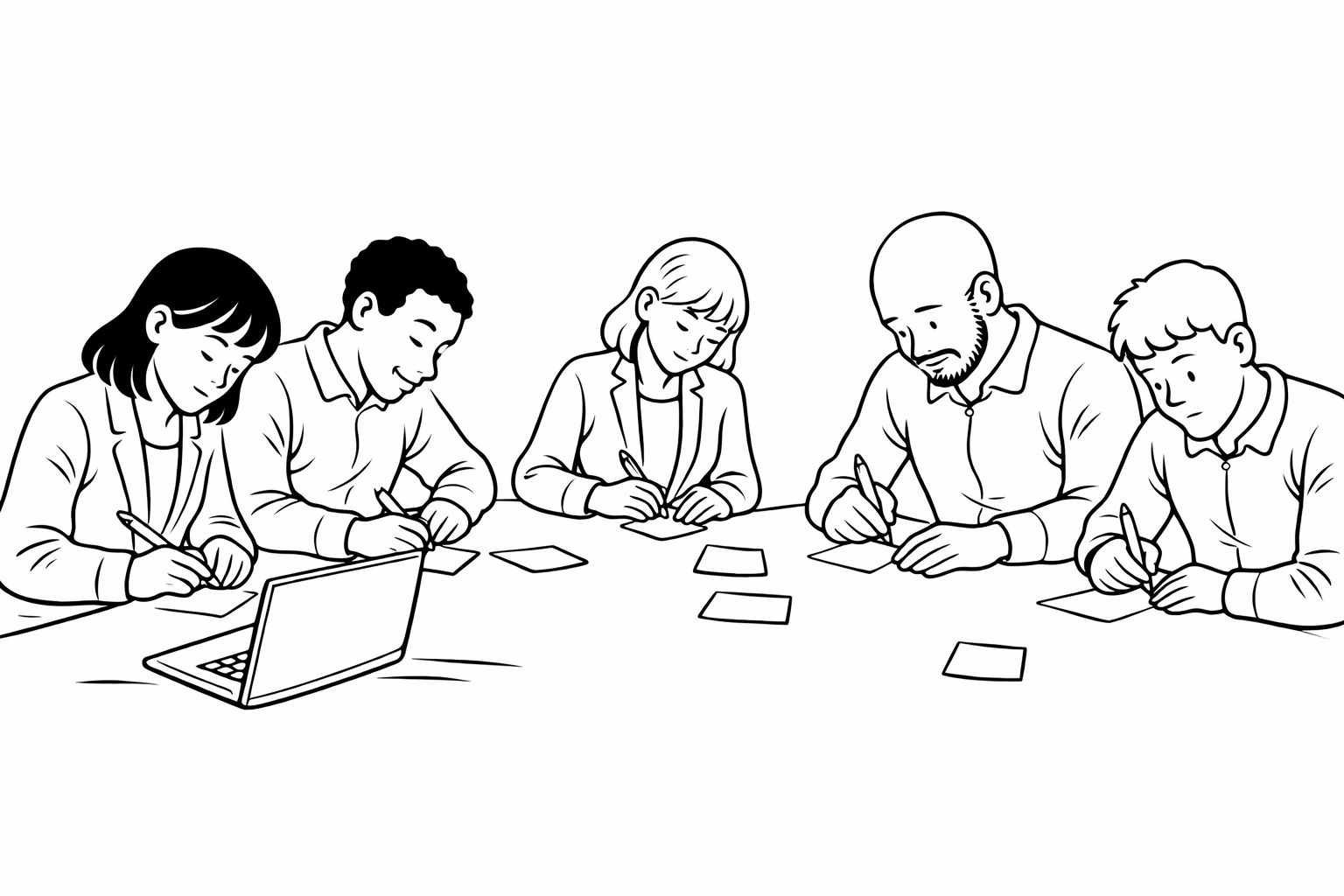
Beginne mit zwei Minuten der Stille. Stelle eine Frage und lass jeden für sich selbst denken und zuerst eine Antwort aufschreiben. Erst dann folgt die Diskussion. Damit wird das Muster des schnellsten Redners durchbrochen. Es gibt den stillen Denkern gleiche Chancen. Es verändert die Qualität der Diskussion von Anfang an spürbar.
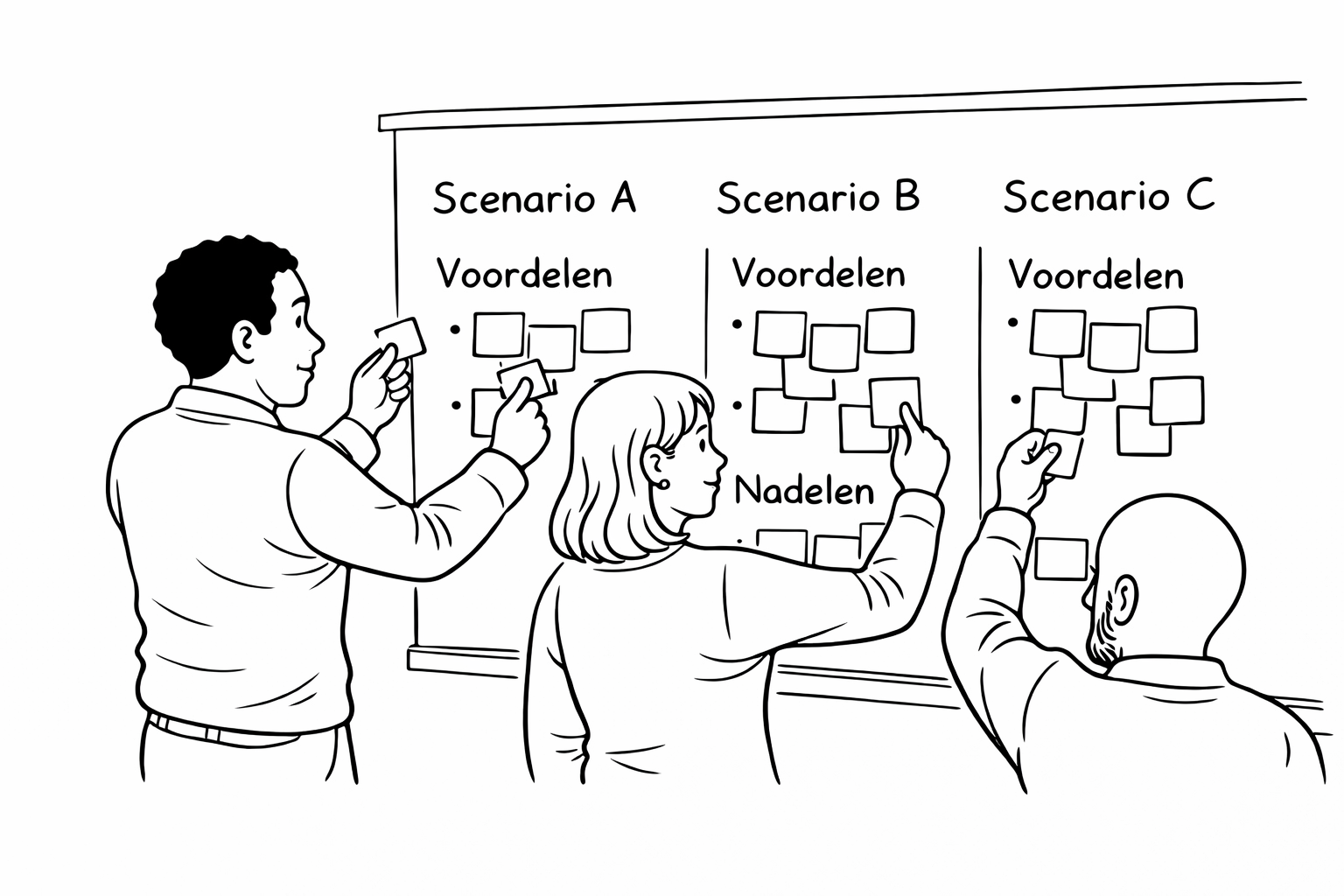
Nutze eine Diskussionsrunde, wenn es darauf ankommt. Nicht für jeden Tagesordnungspunkt, aber für die großen Fragen, die strategischen Entscheidungen, die schwierigen Entscheidungen. Gib allen 60 Sekunden Zeit, um ihre Ideen einzubringen. Keine Reaktionen, keine Diskussion! Bringe zuerst alle Perspektiven auf den Tisch und beginne dann das Gespräch.
Frag explizit nach den leisen Stimmen. Nicht als Trick, sondern als Gewohnheit. “Wir haben drei Perspektiven gehört. Gibt es noch mehr?” Manchmal reicht diese eine Frage aus, um eine weitere Stimme einzuladen, die alles verändert.
Der Zusammenhang mit weniger Treffen
Dieses Thema ist nicht losgelöst von unserer früheren Erkundung des Termindrucks und der kontinuierlichen Verbesserung. Im Gegenteil, es verstärkt es noch.
Lencionis taktisches Meeting funktioniert besser, wenn alle Stimmen in der Blitzrunde gehört werden. Obeya-Tafeln machen Beiträge sichtbar, auch von Leuten, die sich nicht laut äußern. Die A3-Problemlösung erfordert per Definition mehrere Perspektiven bei der Ursachenanalyse. Und Retrospektiven funktionieren nur, wenn sich alle sicher genug fühlen, um ehrlich zu sein.
Die Werkzeuge sind da. Die Strukturen sind da. Aber sie funktionieren nur, wenn die Gruppendynamik es zulässt. Und diese Dynamik beginnt bei dir als Leiter/in.
Was löst das in dir aus?
Beobachte bei deinem nächsten Treffen ganz bewusst das Muster. Wer spricht zuerst? Wer spricht am längsten? Wer bleibt stumm? Und was würde passieren, wenn du dieses Muster durchbrechen würdest?
Vielleicht entdeckst du, dass die besten Ideen bereits im Raum stehen. Sie warten nur auf Platz.
Eine Technik, die du mit deinem Team ausprobieren kannst
Finde heraus, was uns bei unserer Arbeit motiviert und wie sich dies bei verschiedenen Teammitgliedern und in unterschiedlichen Situationen unterscheidet.
Diese Technik verwendet Motivationskarten, um unsere Motivatoren zu untersuchen. Was ist am wichtigsten, um uns zu motivieren, bekommen wir genug davon und wie können wir uns verbessern?
- Stärkung des gegenseitigen Vertrauens
- Verbesserte Fähigkeit, unsere Motivation aufrechtzuerhalten
- Mehr Spaß bei der Arbeit

 English
  Nederlands
  Deutsch
  Français de Belgique