
Mariannes Notebook
While reading the book Hooked!, you may notice small moments that make you pause. A sentence, a question, something that feels familiar, but not yet clear. This page holds my notes behind the story.
When something catches my attention, I look it up. I read, I connect ideas, I write things down, not as final answers, but as thoughts that help me understand what I am seeing and doing.
Some notes lead to a short video. Some to an exercise or a model. Others to research or ideas I want to come back to later.
These notes grow over time. Use this notebook as I do: to explore, to reflect, and to find words for what you already sense in your own work, team, or daily practice. Take what helps. Pick what sparks your interest, and leave the rest for another moment.
Culture Scan
When I first worked with the Culture Scan, I mainly followed the process and watched what happened. What caught my attention came later.
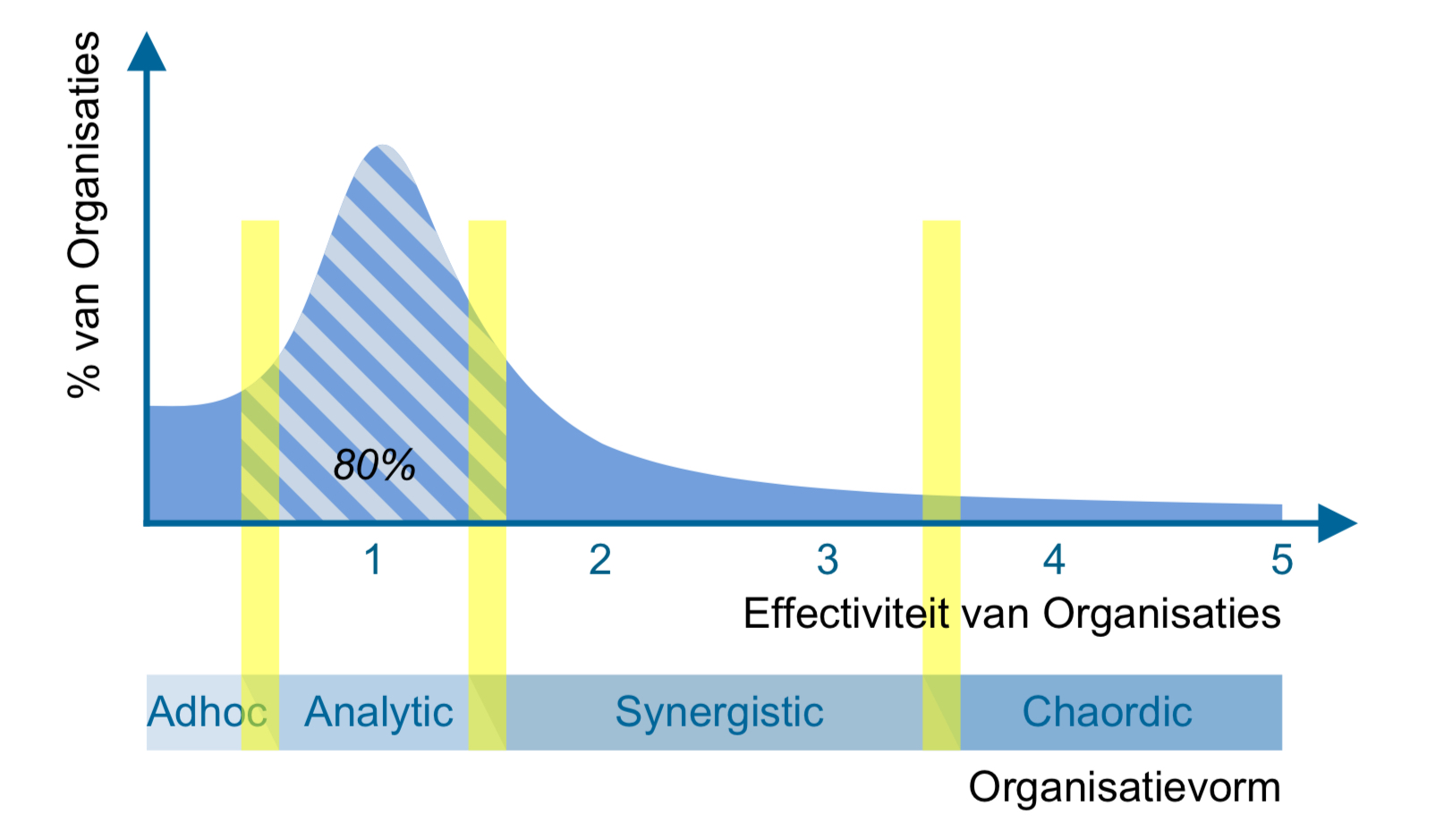
When teams do the scan together, almost everyone wants to move in the same direction. To the right, more trust, more collaboration, more shared responsibility. That part is easy.
What is harder, I have learned, is actually making that move. Looking up the background I came across the work of Bob Marshall and his Rightshifting model. It gave me words for something I already felt in practice.
You cannot move to the right by simply letting go of the left. Some structure is still needed. Some clarity. Some forms of control. Not to restrict people, but to create stability.
The scan makes this visible. By limiting the number of statements teams can choose, the conversation shifts. Less about what sounds good, more about what we really recognise and what we are willing to work toward together.
Later, I learned that there are also important lessons for this in Lean Thinking. Especially the balance between People, Process and Purpose. Whenever one of these dominates, teams seem to lose their footing. When all three are present, movement feels calmer and more sustainable.
My note to self:
Wanting to move right is easy. Moving right takes balance.
Learned Helplessness
Sometimes we help too much. Out of kindness. Out of speed. Out of frustration and slowly, without noticing, someone stops trying.
Psychologists call this learned helplessness. Martin Seligman described it in the late 1960s. When people or animals repeatedly experience that their actions make no difference, they eventually stop taking initiative altogether. Even when change later is possible.
I see this at work sometimes and honestly… also in dog training. A dog that is constantly corrected, pulled away or overhelped can become passive. Not stubborn. Not lazy. Just unsure whether trying still matters.
The same happens in teams. A colleague stops sharing ideas because nobody listens anyway. A team waits for permission because every decision gets taken over. Someone stops learning because effort never seems to lead to success.
The painful part is this:
what looks like lack of motivation is often loss of influence.
Seligman linked this to three thoughts people can get stuck in:
- It is my fault.
- It affects everything.
- It will never change.
And that is where initiative slowly disappears. What helps is surprisingly small.
- Let someone experience again that their actions matter.
- A small success.
- A clear choice.
- A bit of ownership.
- Space to try.
- Space to fail without punishment.
That is also why I keep coming back to the balance between guidance and freedom. Helping is important. But solving everything for someone else can quietly take away confidence.
With Sterre I notice it too.
The moment she discovers something herself, her whole posture changes. More alert. More proud. More connected. Maybe growth always starts there.
My note to self:
If someone stops taking initiative, look first at how much influence they still feel they have.
Early Neurological Stimulation (ENS)
While reading about the early weeks of the pups, I came across Early Neurological Stimulation (ENS).
The work of Carmen Battaglia helped me understand why those first days matter so much.
ENS consists of five small exercises, done briefly between day 3 and day 16 after birth. They introduce mild, controlled stimuli to the nervous system. Nothing intense. Nothing long. Just enough to gently wake up the system.
What struck me most was not the list of exercises, but the restraint behind them. More is not better. Overdoing it works against the effect. And if a litter has already experienced stress, for example during birth, it is better not to apply ENS at all.
Research shows many possible long-term benefits: better stress tolerance, improved learning ability, and more flexibility later in life. But the key seems to be timing and moderation.
My takeaway is simple.
Early experiences shape the system, but only when they are offered with care.
My note to self:
Small impulses, at the right moment, can make a lasting difference.
Early Scent Introduction (ESI)
When I read about Early Scent Introduction (ESI), it immediately made sense to me.
In the first days after birth, when eyes and ears are still closed, the nose is already wide awake.
ESI was developed by Gayle Watkins as part of the Avidog approach. Between day 3 and day 16, each pup is briefly introduced to one new scent per day. Nothing long. Nothing intense. Just enough to gently invite the brain to notice and explore.
What I appreciate most is how careful the protocol is. The pup is always leading. If it turns away, the scent does not follow. If the pup wants to sniff, it gets a little more time. And if a litter has already experienced stress early on, ESI is simply not done.
I found the research behind it convincing, but not spectacular in a flashy way. Over generations, dogs exposed to ESI showed stronger scent awareness, more flexibility in new situations, and more confidence later in life. Especially striking: dogs trained in scent-related work often reached higher levels earlier.
For me, the value is not about creating “better dogs,” but about using a small window of opportunity with care. Early experiences matter, but only when they are offered lightly and with respect for the system.
My note to self:
Let curiosity lead. Stop before it becomes too much.
Learning is more then words
I kept noticing the same thing.
People understand more when they do more than just listen.
At first, I thought this was mainly about making learning more engaging. But when I started reading recent research, I realised it goes much deeper than that. Learning that involves multiple senses does not just feel better — it actually changes how the brain organises itself.
Recent studies show that when learning combines seeing, hearing, moving, and sometimes touching, different brain networks start working together. Attention improves. Memory becomes stronger. What is learned is easier to recall later, even when only part of the original situation is present.
What struck me most is that this is not about adding “fun elements.” It is about how the brain naturally works. It is built to integrate information across senses. When learning stays in words alone, much of that potential remains unused.
This also explains why experiences tend to stay with us longer than explanations. When the body is involved, learning seems to settle more deeply. Not louder. Not faster. Just more connected.
My note to self:
If learning should last, it needs more than words.
Team Development (Tuckman)
People often ask me which model this is. Tuckman. Forming, storming, norming, performing. Yes, sometimes. But that is not what stays with me.
What stays with me is what happens when people move. When they step onto the floor instead of staying in their chairs, the conversation shifts. Standing somewhere makes things tangible. You stop explaining and start noticing. Where am I standing? Why here? Why not there?
Using the Tuckman model on the floor helps. It gives language and helps teams recognise patterns. But it could just as well be another model, another timeline, another set of perspectives. The model is not the point. The floor plates are just a way to bring the body into the conversation.
Once movement is involved, the quality of the dialogue changes. Less debate. More curiosity. Better questions.
My note to self:
Every work format is just a means. The real work happens in what people start to say.

What you work on
I keep noticing how easily we focus on what we do not want. Less mistakes. Less noise. Less resistance. As if naming the problem will automatically show the way forward.
Recent research makes me pause. Again and again it shows the same pattern: working with what you do want is more effective than correcting what you do not want. Not softer. Just clearer.
In dog training, studies show that reward-based methods lead to better learning outcomes and less stress than aversive approaches like shouting or physical correction. Dogs trained by reinforcing desired behaviour learn faster, show fewer avoidance behaviours, and build a stronger bond with their owner. Focusing on what works turns out to be more precise than constantly correcting what does not.
I see the same logic returning in work contexts. Research shows that contingent rewards and positive feedback increase engagement, which in turn improves performance. Punishment, on the other hand, has little direct effect. At best it leads to short-term compliance. At worst it reduces initiative and learning.
What strikes me is that this is not about being nice or optimistic. It is about how learning works. Attention strengthens pathways. Repetition builds confidence. Ignoring unwanted behaviour is often more powerful than fighting it head-on.
This helps me make a conscious choice.
Where do I want people to go?
And what behaviour do I want to see more of?
My note to self:
What I focus on becomes clearer. What becomes clearer, grows.
Brain Plasticity
For a long time, people believed the brain stopped changing after childhood. We now know the opposite is true. The brain keeps adapting throughout life. Every time we repeat something, the neural pathway becomes stronger. New experiences create new pathways. Repetition makes them easier to find.
That changed the way I look at learning. We are not replacing old habits. We are building stronger alternatives.
My note to self:
You shape the brain every day. The real question is: which neural pathways are you strengthening?
Horizons
Accelerate!
I came across the idea behind Accelerate while looking for language that fits what I already see happening in organisations.
Not everything needs to change at once.
And not everything should.
What resonates with me is the image of two systems next to each other. One that provides stability, structure, continuity. And another that creates movement, experimentation and learning. Not a replacement. A coexistence.
This helps me make sense of a tension I often notice. People want more autonomy and speed, but also clarity and safety. Accelerate does not force a choice. It accepts that both are needed, at the same time.
What matters is not the model itself, but the shift in thinking. Change does not have to fight the existing organisation. It can grow alongside it, step by step, where energy and initiative already exist.
My note to self:
Acceleration works best when it builds on what already holds.
Puppy Test
When I first heard about a puppy test, I thought it was about predicting the future.
Which pup will become what.
That is not how I see it anymore.
A puppy test is a snapshot. A careful moment in time where you observe how a pup responds to different situations, stimuli and forms of contact. Not to label, but to understand tendencies. What comes easily. What needs support. Where flexibility already shows, and where it is still developing.
What I appreciate in the approach from Avidog is the restraint. The test is not about passing or failing. It is about gathering information, so you can make better choices later on. For the pup. And for the human who will guide it.
A puppy is not finished.
And neither is the story.
The test does not decide who the dog will become. It helps us start with more awareness, and a bit more respect for what is already there.
My note to self:
Observation is not judgement. It is the beginning of good guidance.
Desire To Collaborate

I keep noticing how easily we try to teach cooperation.
Commands. Rules. Expectations.
But what actually works is something else.
When the desire to collaborate is strong, behaviour follows almost vanzelf. The puppy chooses to check in. To stay connected. To move together. Only later does it make sense to give that behaviour a name, a cue, a command.
What matters is balance. Too much focus on independence and the connection thins out. Too much control and initiative disappears. But when the willingness to work together is trained first, independence does not vanish. It settles.
I see this again and again.
Connection first. Technique later.
My note to self:
When collaboration feels good, behaviour becomes easy to guide.
Broaden Built Effect
For a long time, people believed the brain stopped changing after childhood. We now know the opposite is true. The brain keeps adapting throughout life. Every time we repeat something, the neural pathway becomes stronger. New experiences create new pathways. Repetition makes them easier to find.
That changed the way I look at learning. We are not replacing old habits. We are building stronger alternatives.
My note to self:
You influence the brain with every interaction. Which pathways are you reinforcing?
Shaping with a clickerword
The possibilities of working with a marker word are almost endless. It shifts the focus from correcting what you don’t want to reinforcing what you do want.
The videos show the difference between free shaping and giving more guidance. The first dog is completely new to free shaping. The second already understands the principle, but does not know what the handler wants. You immediately see more initiative and searching behaviour. Free shaping leaves room to explore. Luring gives direction. Assisted shaping sits somewhere in between.
It makes me think about one of the questions I hear most as a team coach: How do I get my team members to take more initiative? Maybe the question is: are you luring them towards your solution, or marking the small steps in the right direction?
And that only works when you know what you do want. Not just the result, but also the behaviour and capabilities needed to get there.
My note to self:
If I want more initiative, I need to leave room to explore and shape with .
Motivational Interviewing traps
Motivational Interviewing describes traps that coaches and leaders can easily fall into. One I learned to recognise is the ‘stupid question’, or in Dutch the ‘sukkelvraag’: a question that may sound open, but where you (often unconsciously) add the word “sukkel” in your head. The moment you do that, you put the other person in a defensive position, and that immediately creates resistance. And that is exactly what you want to avoid. Motivational Interviewing is designed to prevent that dynamic.
And there are more of these traps. Giving advice too quickly. Acting as the expert. Asking question after question. Focusing on the problem before the other person is ready.
The video shows several of these traps and, more importantly, what you can do instead.
My note to self:
Before asking a question: am I curious about the answer, or am I trying to steer it?
Heelwork
Precision paws gundog heelwork training en voorbeeld heelwork en placeboard toelichting
Neuroplasticity
Barbara Friedrichson about Broaden Build Effect
Oei ik groei
Adolescence: when the world gets bigger
A puppy’s development does not follow a straight line. As puppies grow, the way they interact with the world around them changes.
Around 8–16 weeks – Discovering the world
Puppies are highly receptive to new experiences. They explore people, places, sounds and other animals and learn what is safe and worth paying attention to.
Around 4–6 months – Growing confidence
Puppies become more capable and confident. They start doing more things independently and their environment becomes increasingly interesting.
Around 6–12 months – Adolescence
Hormonal and developmental changes bring greater independence and exploration. Things that seemed well learned may suddenly become less reliable. Research has found a temporary drop in responsiveness to the caregiver at around eight months. Interestingly, the dogs had not simply forgotten what they had learned.
From adolescence towards adulthood – Finding balance
Experience, repetition and maturity gradually help dogs deal with distractions, regulate their behaviour and use what they have learned in different situations.
So when your adolescent dog suddenly seems to have forgotten everything, she may actually be doing something important: learning how to use what she knows in a much bigger world.
For Marianne, that is a useful thought as Sterre approaches this phase. Maybe the question is not “Why doesn’t she listen anymore?” but “What is she learning right now?”
 English
  Nederlands
  Deutsch
  Français de Belgique