
The surprising value of not getting what you want
Yesterday, during a Dopamine Box workshop for dogs, my popcorn brain (thank you, Sigrid van Iersel) went into overdrive again. This time, it was mostly focused on the concept of Tolerance of Frustration.
Why This concept?
The Frustration Tolerance concept touches something in me. I’m concerned that frustration tolerance is declining, in dogs, in people, in society, and consequently in our workplaces. Increased reactivity in dogs and growing irritation between people, and emotional explosions on social media are just a few examples.
Like many other parents, I have a natural tendency to protect my kid from difficulties. I want to prevent mistakes, disappointments, and pain. In my job as an organization coach, I’m constantly looking for ways to guide change in organizations and teams as positively as possible, trying to remove all the obstacles.
On a smaller scale, I’m thinking about how to raise my upcoming puppy. If I’m honest, I would love to give my puppy nothing but positive learning experiences. I prepare the path for its future by removing every possible obstacle. I start avoiding situations that trigger stress in my puppy. When I am not careful I end up walking them only late at night in deserted industrial areas.
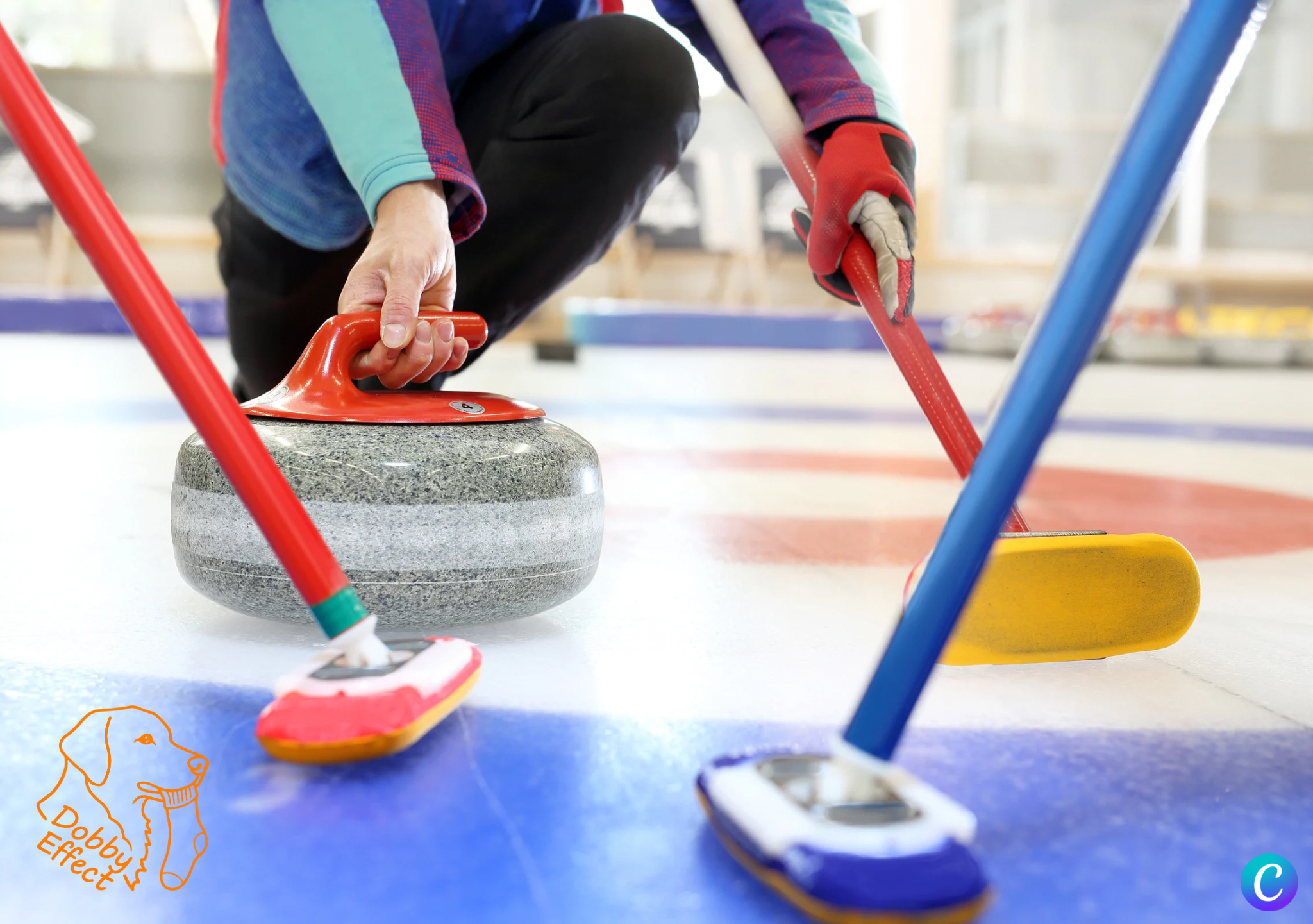
I know this kind of behaviour, often referred to as curling (the team sport where you sweep the ice to control the stone’s speed and direction while it slides towards a target), can lead to a reactive dog, because it never learns to deal with stressful situations.
The Result?
Reactivity in a dog doesn’t disappear by curling. Often it becomes even stronger when the dog inevitably encounters sources of frustration. I see similar patterns in the people around me. All I have to do is open a social media app and read the comments under well-intentioned, neutral, or even positive posts.
In dog training, there are various exercises, ranging from simple to quite advanced, that are designed to build (or rebuild) frustration tolerance in a positive way. The Dopamine Box from yesterday’s workshop is one of them.
What these exercises have in common
- They help the dog figure things out independently (Montessori uses a similar principle)
- They respect the dog as an individual
- They encourage learning through experimentation
- They help develop better decision-making
- They build motivation by delaying gratification
- They increase calmness and focus through thoughtful use of rewards
What makes me curious is how these insights might apply to my work.
My thoughts immediately go to the Job Demands–Resources (JD-R) model that is used in research on burnout. There too, the evidence suggests that the key to helping burnout patients is often not removing every demand, but increasing the resources and coping strategies people can draw upon. In other words, building someone’s backpack for dealing with their job demands may matter more than removing obstacles from their path.
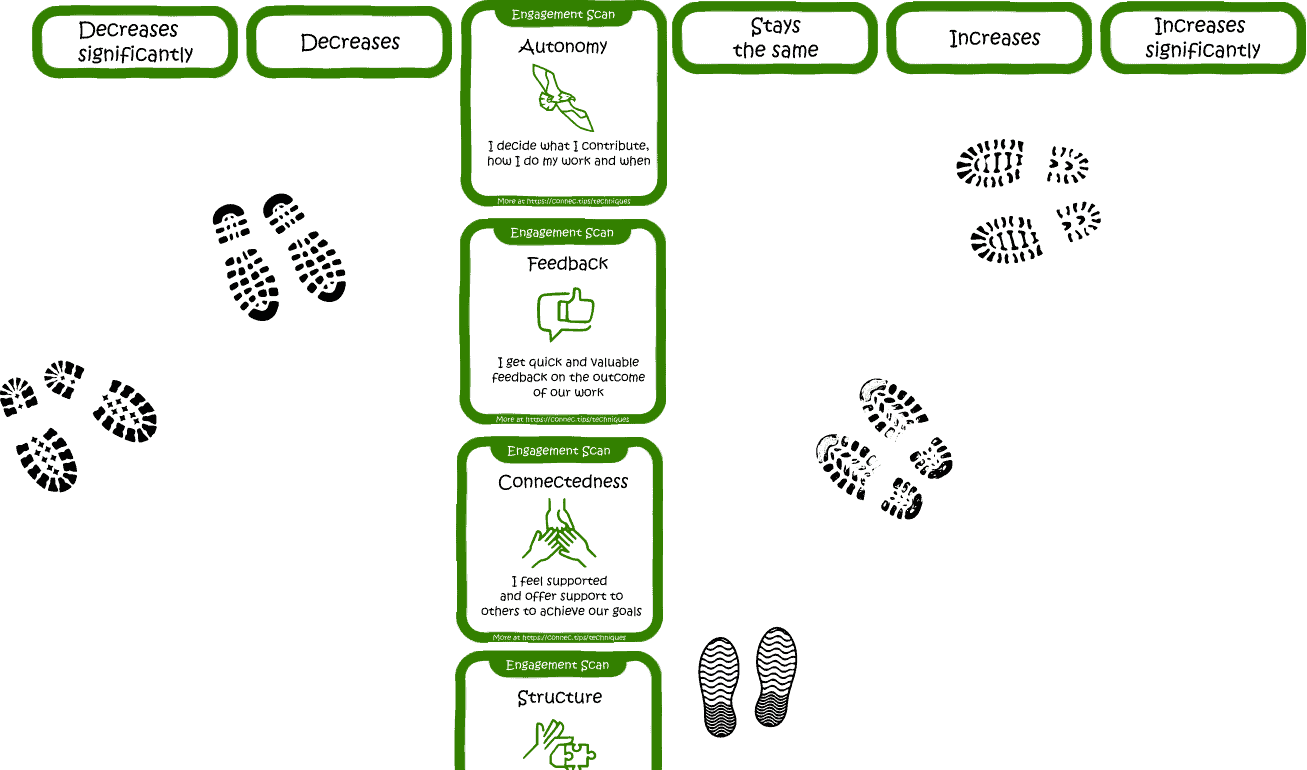
Engagement Scan based on the Job Demands-Resource Model
The engagement scan is a simple instrument that consists of seven motivators. Each motivator looks at a specific energy sources, as identified by scientific research based on the Job Demands-Resource Model. An energy sources helps you cope with job demands and therefore contributes to the engagement and job satisfaction of team members.
 English
  Nederlands
  Deutsch
  Français de Belgique